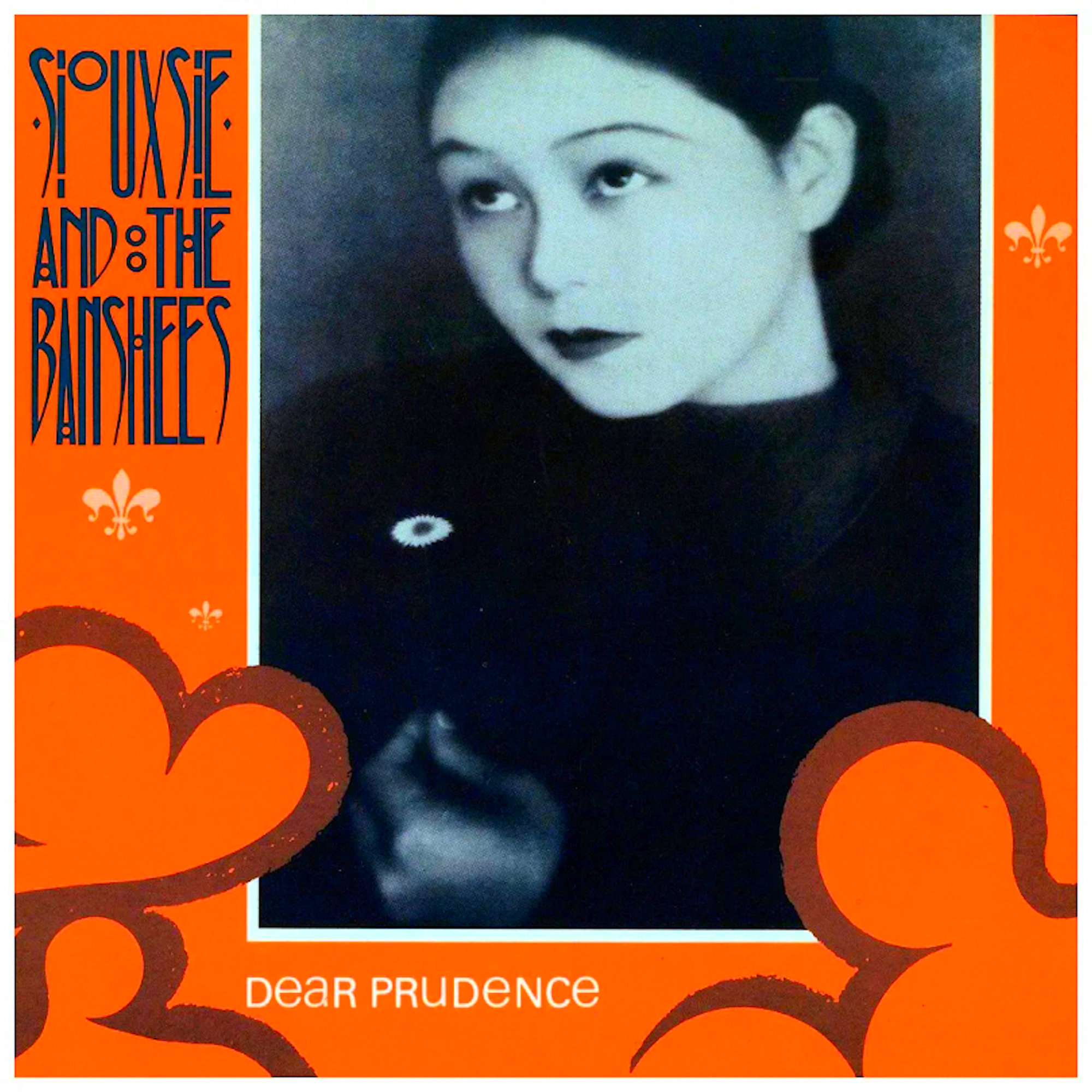
A-Side: Dear Prudence
B-Side: Tattoo
Record label: Wonderland SHE 4
Producer: Mike Hodges & Siouxsie and the Banshees
Released: 23/09/83
Purchased: 24/09/83
Siouxsie & the Banshees “Dear Prudence” – Siouxsie’s always had a bit of the old Alice In Wonderland about her and it’s not surprising that she should choose to revive a Beatles song from their whimsical period.
She’s even kept the phasing. But does she know that it was originally written for actress Mia Farrow’s sister? Thought not. (Smash Hits)
Sioux and the banshee boys whip up Lennon’s warped ‘White Album’ lust song into a pristine psychedelic outing replete with dreamy phasing and vocal overlays. Nice but not special enough. (Record Mirror, 17/09/83)
A beautiful sleeve and a less than astonishing cover. As Siouxsie’s pop star standing dissolves from light to dark and back again the records of her group are getting fogged and indecisive. Whirlybird guitars and even some nostalgic phasing scarcely paper over a cracking and under-fed treatment of a dried-out chestnut. What will they do next – “The Continuing Story of Bungalow Bill”? (NME, 17/09/83)

Inspiration or desperation? The Banshees sensibly play this unexceptional old Beatles song fairly straight with only the token phasing and stereo effects to emphasise their ahem, weirdness.
Maybe they’d run out of acid. Given their obsession with the ‘White Album’ we’re lucky at least they didn’t do “Ricky Racoon“. A monster hit. (Sounds, 17/09/83)
This 45 was an unexpected foray into psychedelia by a band more associated with the 70s punk rock scene in England, but by 1983 they had developed a more complex sound and had undergone a few personnel changes.
One such change was the introduction of Robert Smith from The Cure on lead guitar. He took over duties from John McGeogh and persuaded the band to record The Beatles classic ’Dear Prudence’.
The Siouxsie and the Banshees version is a much quicker assault with Robert Smith’s guitar to the fore. During this period he was solely using a Vox Teardrop Mark VI. Producer Mike Hodges also uses the technique of phasing or ’skying’ as it’s sometimes known to create that otherworldly soundscape. (EXPO67)

Leave a Reply